

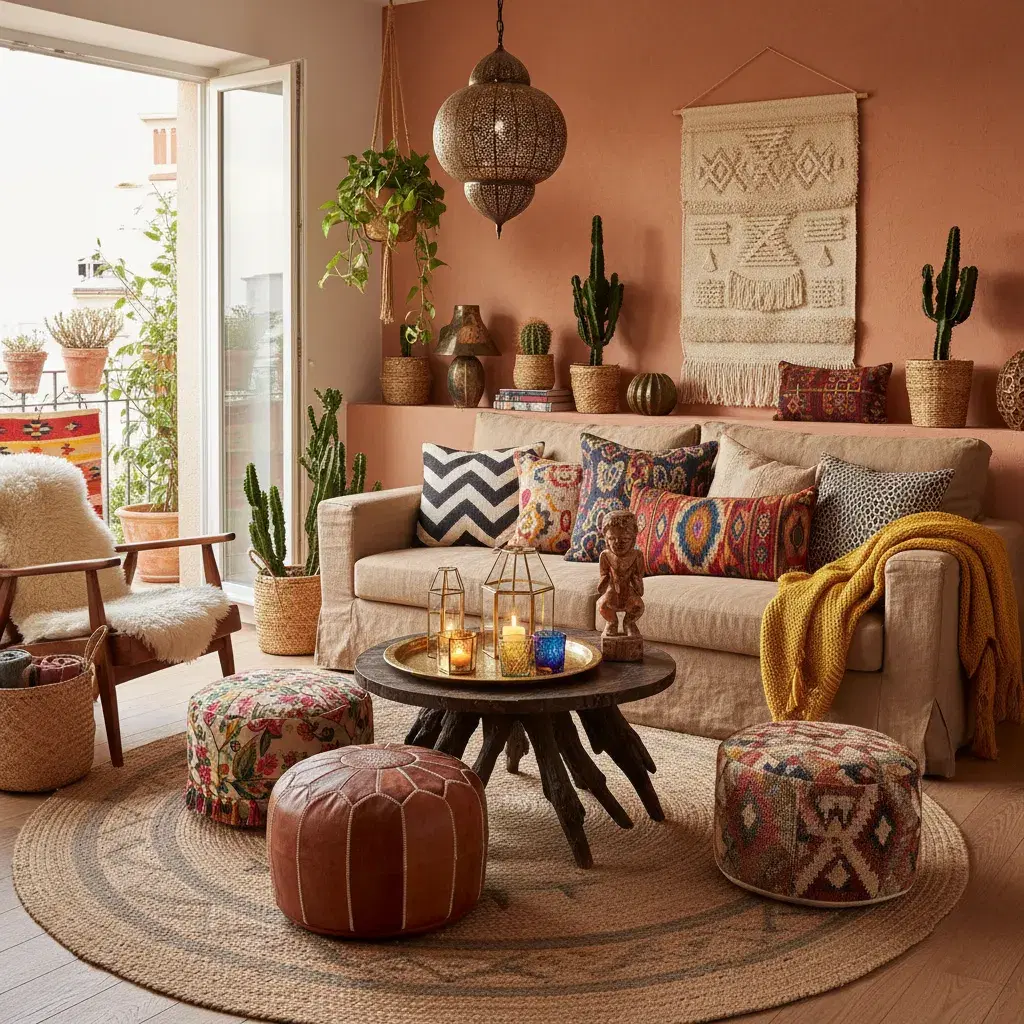
Tribal rugs add strong visual character to a room without making it feel crowded because their patterns are structured, purposeful, and rooted in centuries-old design logic. With the right size, color, and placement, a single tribal rug can anchor an entire room—no extra décor required.
Most people assume that bold patterns automatically mean a busy room. Tribal rugs prove otherwise. Their geometric designs are intentional, balanced, and surprisingly easy to style—whether you’re working with a minimalist apartment or a more layered, traditional home.
This post breaks down exactly how tribal rugs work in real interiors: why their patterns don’t overwhelm, how to choose colors that complement your existing space, and where to place them for the best effect. We’ll also look at what sets handcrafted rugs apart and why that matters when you buy carpets online in India.
What Makes Tribal Rug Design Visually Balanced?
Tribal rugs have been designed by hand for centuries—and that history shows. Unlike mass-produced rugs with arbitrary prints, traditional tribal designs follow a clear visual grammar. Repeated geometric shapes, mirrored motifs, and structured borders create a sense of order, even when the overall pattern looks complex.
This internal balance is what keeps tribal rugs from feeling chaotic. Every color and shape has a counterpart. The result is a rug that draws the eye without holding it hostage.
How color and pattern work together in tribal designs
In tribal weaving traditions, color and pattern aren’t chosen separately—they function as a system. Deep reds are balanced by cool blues. Cream grounds soften bold borders. The contrast is deliberate.
This means when you bring a tribal rug into a room, the color relationships built into the rug itself do a lot of the styling work for you.
Why tribal rugs complement modern interiors
Modern rooms tend to lean on neutral walls, clean lines, and minimal furniture. That restraint creates the perfect backdrop for a tribal rug. The rug adds warmth and texture without competing with anything else in the space.
How to Choose Tribal Rug Colors That Enhance Your Space
Neutral tribal rugs that anchor a room
Not every tribal rug uses saturated color. Many feature soft ivory, sandy beige, or warm grey as their dominant tones, with subtle geometric patterning layered over the top. These work particularly well in rooms where you want texture and visual interest without introducing new colors into your palette.
A neutral tribal rug grounds a living room or bedroom the same way a natural wood floor does—it adds depth without distraction.
Bold colors that add personality without dominating
A tribal rug in deep terracotta, indigo, or forest green can become the defining element of a room—but only if you let it. The key is restraint everywhere else. Keep walls light, sofas in solid tones, and avoid stacking other patterned elements on top.
Bold tribal rugs work best as the single statement in a space.
How to match tribal rug colors to your existing décor
Start with your furniture. Pull one color from your sofa, curtains, or a frequently used cushion, and look for a tribal rug that echoes that tone. You don’t need an exact match—a complementary hue or a darker shade of the same family is usually more interesting.
If your room already has strong colors, a tribal rug with a neutral ground and colored accents can tie everything together without adding visual noise.
Pattern Strategy: Less Is More
Geometric patterns that add visual interest without clutter
Tribal rug patterns are almost always geometric—diamonds, chevrons, stepped medallions, and interlocking borders. These shapes are clean and repeatable. They create rhythm rather than randomness, which is what separates a visually interesting rug from a busy one.
Geometric patterns are also predictable in a good way. Your brain processes them quickly, which means the room feels organized rather than overwhelming.
How tribal designs create natural focal points
A well-placed tribal rug draws attention to the center of a room—the seating area, the dining table, the bed—and keeps it there. This focal point effect reduces the need for other decorative elements. The rug does the heavy lifting.
Tips for pairing patterned rugs with other room elements
-
Keep upholstery in solid colors or subtle textures
-
Avoid combining tribal rugs with other large-scale patterns like wallpaper or printed curtains
-
Use the rug’s colors to inform your cushion and throw choices—but stick to solids
Placement Tips for Maximum Impact
Where to position tribal rugs in different room layouts
In a living room, the rug should sit under the front legs of all main seating pieces—or under all legs if the rug is large enough. This connects the furniture and defines the zone.
In a bedroom, a tribal rug placed two-thirds under the bed (with equal amounts showing on both sides) creates a grounding effect that makes the room feel intentional.
In a dining room, the rug should be large enough that chairs remain on the rug even when pulled out.
How rug size affects the overall feel of a space
This is where most people make mistakes. A rug that’s too small makes furniture look disconnected and the room feel smaller. A rug that fills more of the floor area actually makes a room feel larger and more put-together.
When in doubt, go bigger.
Using tribal rugs to define zones in open-plan rooms
Open-plan spaces often feel undefined. A tribal rug is one of the most effective tools for solving this. Place one under the living area furniture and another—in a complementary colorway—under the dining table. Two rugs, two zones, no walls needed.
Why Handcrafted Rugs in Delhi Matter
The quality difference between machine-made and handcrafted options
Machine-made rugs replicate patterns but can’t replicate the material quality, texture variation, or structural integrity of a hand-knotted or hand-tufted rug. Handcrafted rugs in Delhi and the wider Bhadohi region are produced by artisans who have refined their technique over decades. The result is a product that wears better, ages better, and looks better over time.
A machine-made rug flattens under foot traffic. A handcrafted rug only gets more characterful.
How The Ambiente’s tribal rugs ensure authenticity
The Ambiente is based in Bhadohi—India’s largest hub for hand-knotted carpet weaving—and operates a flagship store in Sultanpur, New Delhi. Backed by Bhadohi Carpets, a manufacturer and exporter with over 30 years of experience, the brand works with more than 4,000 artisans, the majority of whom are women weavers.
Every rug is produced through a close collaboration between traditional craftspeople and an in-house design team. That means you get a rug that carries authentic tribal design logic, not just tribal-inspired print.
Supporting traditional craftsmanship when you buy carpets online India
When you buy carpets online in India through The Ambiente, you’re buying directly from a brand connected to the source. There’s no middleman inflating the price, and no shortcuts taken in production. The Ambiente’s mission, as founder Avani Khandelwal puts it, is to “make the beauty of handcrafted rugs a part of every Indian home’s story.”
That’s a meaningful difference from buying a printed rug off a generic e-commerce shelf.
Styling Examples
Minimalist rooms with one bold tribal rug: A white room with a single deep-red tribal rug and black-framed furniture. Nothing else competes. The rug is the room’s personality.
Contemporary vs. traditional spaces: In a contemporary space, a tribal rug adds warmth and history. In a traditional space, it fits seamlessly into the existing layering of pattern and texture. Few rug styles work across both contexts—tribal designs do.
Open-plan transformations: Many clients use tribal rugs to solve the “where does one room end and another begin?” problem in open-plan homes. Two coordinating tribal rugs can do more structural work than a wall.
The Smart Way to Add Pattern to Any Room
Tribal rugs are one of the few decorating choices that deliver strong visual impact without requiring you to rebuild the rest of a room around them. Their patterns are structured enough to feel orderly. Their colors are rich enough to matter. And their craftsmanship—when handmade—means they last.
If you’re ready to bring pattern into your home without the clutter, The Ambiente’s curated collection of tribal rugs offers handcrafted options across a range of styles, sizes, and price points. Browse the collection online, or visit the flagship store in Sultanpur, New Delhi.
One rug. A completely different room.
Frequently Asked Questions About Tribal Rugs
Are tribal rugs suitable for small rooms?
Yes. A well-sized tribal rug actually makes a small room feel larger by grounding the furniture and defining the space clearly. Avoid rugs that are too small—they tend to shrink a room visually.
How do I prevent a tribal rug from making my room look too busy?
Keep everything else in the room simple. Solid-colored furniture, plain walls, and minimal accessories let the rug stand out without creating visual overload.
What’s the difference between a tribal rug and a traditional area rug?
Tribal rugs are typically hand-knotted or hand-woven with geometric motifs rooted in specific cultural weaving traditions. Traditional area rugs can include floral, medallion, or abstract designs and may be machine-made. The key distinction is usually in the production method and design origin.
Can I buy handcrafted tribal rugs online in India?
Yes. The Ambiente offers a ready-to-ship collection of handcrafted tribal rugs available to buy online across India. The brand is backed by over 30 years of manufacturing experience through Bhadohi Carpets.
How do I care for a handcrafted tribal rug?
Rotate the rug every six months to ensure even wear, vacuum gently without a beater bar, and have it professionally cleaned every two to three years. Avoid prolonged exposure to direct sunlight, which can fade natural dyes over time.
Are handcrafted rugs worth the higher price?
For most buyers, yes. Handcrafted rugs last significantly longer than machine-made alternatives, maintain their texture and pile better under heavy use, and tend to appreciate in character over time rather than deteriorate.
